


Building a Strong Foundation for Boulder’s Future
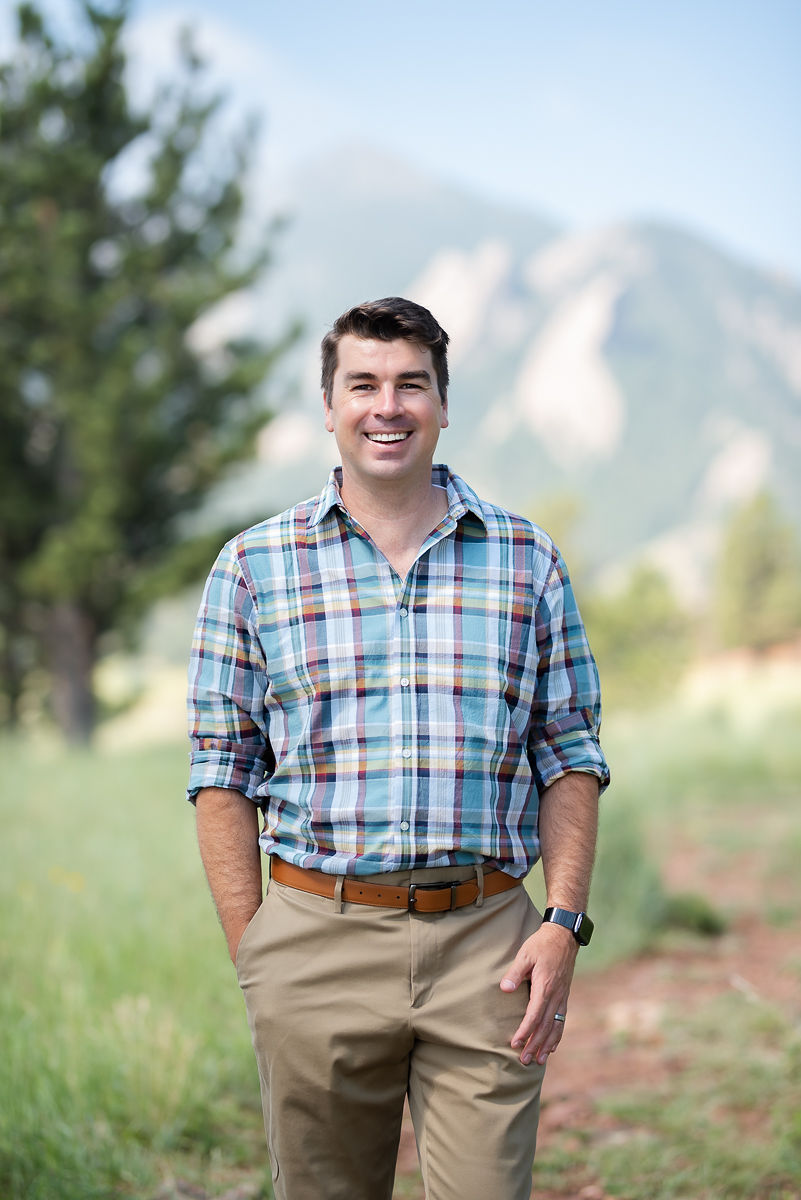

Dear Friends and Neighbors.
For 15 years, I had the privilege of managing Fiske Planetarium at the University of Colorado Boulder. During that time, I worked on NASA-funded grants with scientists and teams involved in space missions. I learned that successful missions begin long before launch, sometimes a decade or more. They begin with discipline about the mission itself.
When a spacecraft operates hundreds of millions, or even billions, of miles from the Sun, power is finite. Solar panels and onboard systems can produce only so much energy. Every instrument may be scientifically valuable, but the spacecraft cannot run every instrument at full power all the time. Mission teams therefore identify the primary science, the observations that justify the mission and must succeed, and allocate power, time, data capacity and people to those priorities first. Only after the primary mission is protected do they decide which secondary objectives the spacecraft can support.
That is not merely an analogy I like. It reflects how I learned to think about complex missions during my years at CU Boulder: define what matters most, match resources to it honestly, measure whether it works, and do not pretend that finite capacity is infinite.
A city budget requires the same discipline.
Our “solar panels” are the taxes, fees, and other revenues the public entrusts to us. Our “instruments” are the services and investments that make Boulder work: public safety, streets and snow removal, wildfire resilience, parks and recreation, open space, housing, human services, planning, arts, economic vitality and much more.
The same finite-resource principle is familiar to families, homeowners and businesses across Boulder. If a water heater fails or a windstorm blows down a fence, a homeowner handles the essential repair before a desirable upgrade. A business must first make payroll, maintain safe facilities and equipment, and meet its legal obligations before taking on extras.
A city budget follows that same basic logic, even though municipal finance is more complicated than a household checkbook. Public dollars can be legally restricted, cities must plan across economic cycles, and a timely investment can prevent a much higher cost later. The discipline still applies: protect the must-haves, fund essential services and maintenance honestly, and then decide which additional commitments we can responsibly afford.
Many of these services, including the priorities residents identified through Fund Our Future, reflect deeply held community values. But every recurring commitment draws power from the same finite system. If we try to operate every program at full capacity without identifying our primary mission, we risk spreading resources too thin, underfunding basic services, and asking residents for more money without showing what their current investment delivers.
That makes the first question straightforward: what did residents say matters most?
The Community Already Identified the Primary Mission
Earlier this year, the city did something important: it asked residents directly what they consider core and essential.
Through the Fund Our Future community conversations, more than 500 community members evaluated where they would increase, maintain or reduce investment across 25 city services. The City’s official summary identified four shared priorities, followed closely by homelessness-related services: [Fund Our Future results]
Wildfire response and preparedness
Ongoing maintenance of city facilities
Snow and ice response
Public safety
Homelessness-related services

Wildfire was described as the clearest cross-community request for increased service levels and prioritization.
Residents did more than provide a general list of things they like. They told us which services they would scrutinize most closely when evaluating whether the city's budget reflects their priorities.
That feedback should have become an organizing spine of the proposed budget.
For each of the five priorities, residents should have been able to open a single, clearly labeled priority budget showing:
the total citywide investment across every department and fund;
what portion is personnel, direct operating work, and capital;
which dollars are ongoing and which disappear after one year;
the current service level and unmet need;
what the 2027 recommendation adds, reduces or merely shifts;
the measurable outcomes the public should expect; and
what an enhanced or reduced option would cost and change.
The budget contains a great deal of information, and staff created a useful Budget At-A-Glance page. But these five community priorities are not readily available as five unified, cross-department budgets. The information is dispersed among departments, programs, funds, expense categories, capital schedules, and narrative pages. [Budget At-A-Glance]
That distinction matters. Access is not the same as discoverability. Residents should not have to know the city's organizational chart, search hundreds of pages, or email Council to learn how their highest priorities are funded.
Currently, community members email Council. Council then asks staff. Staff assembles a new analysis or crosswalk. The answer may eventually be helpful, but the public should not need a bespoke Council inquiry to answer a basic budget question.
Boulder’s 2027 Budget at a Glance
Boulder’s proposed 2027 budget totals $552.6 million across all funds. Of that, $417.2 million supports operations and $135.4 million supports capital projects. [2027 Budget in Brief]
Utilities accounts for $142.9 million, largely the rate-funded water, wastewater, and stormwater and flood systems. Excluding the three rate-funded utility funds, the City reports a remaining budget of $416.0 million. That remainder is not a discretionary checkbook: it still includes capital projects, voter-dedicated taxes, grants, debt obligations, transfers and other legally restricted funds. [Utilities budget]
The $200.5 million General Fund is the part of the budget with the broadest flexibility, but it is not a blank check. It supports core services including police, fire-rescue, parks and recreation, housing and human services, legal services, technology, facilities, finance and city administration. Police and Fire-Rescue alone account for $85.2 million, or 42.5% of the General Fund. [General Fund financial]
Some revenue inside the General Fund is also restricted to specific purposes. Staff identifies $9.9 million in 2027 from a 2.000-mill Public Safety Property Tax and $1.9 million from the Short-Term Rental Accommodations Tax, which first pays for administration and enforcement of the short-term-rental program and then supports affordable housing. [short-term-rental tax code]
Closing a $6.3 Million Gap
Within the General Fund, the city faced a projected $6.3 million ongoing shortfall as major revenues flattened and costs continued to rise. The final recommended budget closes that gap through a combination of reductions, service changes, fund realignments, and new or increased revenue, not through one single adjustment. [Budget in Brief]
The city’s Budget in Brief identifies several visible service reductions:
Eliminate the staffed photo-radar van program and rely on police traffic patrols when needed. [source]
Reduce Scott Carpenter Pool hours during the shoulder season and reduce some indoor open-swim and leisure-pool hours during lower-demand periods. [source]
End ongoing funding for Spruce Pool after 2027; one-time money keeps it open for one additional year. [source]
Eliminate the underused child-watch service at East Boulder Community Center. [source]
Reduce Nature-Based Climate Solutions consultant funding as previously funded studies are completed. [source]
Reduce the Flexible Rebate economic-incentive program. [source]
The budget also relies on additional and redirected revenue:
Transportation Maintenance Fee: collection begins in 2027 and is expected to provide $3.03 million for bridge maintenance, pavement, sidewalks, and street markings. This is dedicated transportation revenue, not general discretionary money. [source]
Recreational marijuana retail tax: the rate rises from 3.5% to 5.5% in 2027; the budget forecasts a 41.2% year-over-year increase in that retail-tax revenue. [source]
Fund realignments: existing Open Space, Climate Tax and Sugar-Sweetened Beverage Tax dollars are redirected toward eligible current services. The Open Space shift reduces pressure on the General Fund; the Climate Tax and Sugar-Sweetened Beverage Tax shifts reduce pressure on other strained operating funds, including recreation funds. [source]
Department totals do not all represent the same kind of money. Some departments rely mostly on rates or legally restricted funds, while others depend heavily on the General Fund. The comparison below shows both the size of each department and the portion funded through the General Fund—the dollars over which Council generally has the most flexibility.[Budget in Brief]

The contrast is the point: Utilities’ $142.9 million budget is almost entirely rate-funded, while Police’s $54.2 million budget is entirely General Fund. Department size alone does not show how much budget flexibility Council has. Totals are rounded and should not be added to reproduce the $552.6 million citywide figure because transfers can appear in more than one department budget. [General Fund financial]
Before turning to my recommendations, I want to recognize the work behind these numbers. The City Manager and staff have done a strong job assembling and balancing a $552.6 million budget across 18 departments, dozens of funds, legal restrictions, labor commitments, capital projects and changing revenue conditions. Producing a budget of this scale is difficult, and the budget book contains a great deal of useful information. My recommendations are not a criticism of that effort. They are intended to give Council, staff and the public a stronger framework for making major tradeoffs earlier and connecting our priorities more clearly to dollars and measurable outcomes.
Wildfire Shows Both the Problem and the Opportunity
Wildfire is the clearest example because it was the community's strongest shared priority.
The proposed budget highlighted more than $11 million in citywide wildfire-resilience and response investment across ten departments. But the public budget did not initially provide one consolidated schedule showing how that number was constructed. [budget message]
After I asked, staff responded with a high-level 2027 planning estimate of approximately $10.95 million:
$6.517 million in personnel;
$3.459 million in nonpersonnel operating costs; and
$970,000 in capital investment.
The rounded components total approximately $10.946 million, slightly below the budget’s published ‘over $11 million’ headline.

I appreciate staff producing that information. It was useful, and it helped advance the conversation. But the estimate is not yet accompanied by a public, line-item schedule showing the positions and fractions of staff time, fund and program sources, one-time and ongoing amounts, or which items are included in the published headline. Because much of the estimate consists of allocated staff time, the figures below should be read as directional policy targets until that schedule is published and reconciled.
It also demonstrated the transparency gap. Personnel is real wildfire work. Planning, firefighting, forestry, inspections, public education, emergency management, and program administration all require people. But allocated existing staff time is not the same as added risk-reduction capacity. A public budget should distinguish base activity from new investment and connect each dollar to outcomes such as acres treated, homes mitigated, and response improvements.
This matters because the proposed 2027 budget adds a one-time $300,000 enhancement to the named Community Wildfire Resilience program, bringing the program to $1.8 million for 2027 on top of the ongoing $1.5 million Climate Tax earmark. The $300,000 is a specific enhancement, not the literal year-over-year net change in the three departments’ program lines. The named $1.8 million program spans Climate Initiatives, Fire-Rescue, and Finance. Under a broader methodology, staff separately attributed $2.465 million of Climate Initiatives Department activity to wildfire. These are different scopes, and they overlap only in Climate Initiatives’ approximately $1.126 million share of the named program. Both indicate meaningful work, but the added capacity remains modest relative to the priority residents expressed and the scale of our risk.
I believe Council should direct the City Manager to return with a balanced package targeting at least $20 million in total 2027 citywide wildfire-resilience investment. Using staff’s current approximately $10.95 million planning estimate as a provisional baseline, that implies roughly $9.1 million in additional investment, or about 83%.
This is a directional policy target, not a claim that $9.1 million is sitting uncommitted or that the provisional baseline is an audited total. Staff must validate the baseline, identify the exact sources, restrictions, offsets and implementation capacity, and Council must make the tradeoffs in public.
The funding framework I have proposed is:
Using staff’s broader departmental methodology as a provisional baseline, approximately $2.465 million of Climate Initiatives activity is attributed to wildfire. If staff confirms that scope, adding about $2 million would bring the broader allocation to approximately $4.465 million, close to the $4.54 million that would equal half of the department’s $9.081 million budget. This is a proposal to increase total wildfire-focused work, not merely to enlarge the narrower $1.8 million cross-department program.
The Climate Tax approved by voters expressly lists wildfire home-risk assessments, wildfire mitigation planning and implementation, natural climate solutions, microgrids and systems that increase reliability and resilience, incentives to accelerate undergrounding of utility lines, and matching funds. A larger temporary wildfire allocation therefore aligns with voter-authorized purposes. [2022 ballot language]
The reallocation should:
focus more Nature-Based Climate Solutions funding on prescribed fire, grassland and forest fuel reduction, targeted grazing and measurable mitigation;
examine whether Circular Economy fits more naturally within the city's economic-development and materials-reuse work while preserving all Climate Tax restrictions;
protect Energy Systems work directly tied to Xcel, public-safety power shutoffs, strategic undergrounding, microgrids, critical-facility resilience and utility wildfire-risk reduction; and
review administration, cross-cutting programs and transfers for consolidation or reassignment.
This is not a proposal to abandon climate work. Wildfire resilience is climate resilience. The purpose is to align more of our climate investment with the immediate climate risk residents identified most clearly.
Staff’s high-level estimate attributes approximately $5.757 million of Open Space and Mountain Parks work to wildfire. Subject to staff confirming that amount and its allocation method, I want staff to identify an additional $4 million to $5 million of Open Space investment and the specific work that would be reprioritized or deferred.
Added funding should purchase visible field capacity and landscape outcomes, including:
priority wildland-urban interface fuel treatments;
prescribed fire;
targeted grazing;
mowing and mechanical treatment;
forest thinning and hazard-tree work;
seasonal crews and specialized contractors; and
equipment needed to expand the pace and scale of treatment.
Open Space funds are restricted, and much of OSMP's work serves multiple ecological, recreational, safety and stewardship purposes. This proposal must therefore identify eligible sources and honest tradeoffs. It should not relabel existing ranger, ecology or planning work as a new wildfire enhancement.
The remaining amount should come from a combination of:
state, federal, utility, county and private matching funds;
other legally eligible city sources;
available one-time resources;
phased implementation where staffing, contracting, equipment or environmental review limits 2027 delivery; and
explicit Council tradeoffs.
The General Fund should be used only if Council knowingly identifies an available source or offset and makes the associated service tradeoff visible.
If staff concludes that the full increase cannot be responsibly deployed in 2027, it should propose a specific implementation schedule—with annual funding and outcome milestones—for reaching the $20 million annual investment level. Existing work should not be relabeled as a new enhancement.
The goal is not a larger headline. It is more protection.
Any amendment should include annual public reporting with consistent definitions and a stable baseline. At minimum, residents should be able to see:
acres treated by prescribed fire, mechanical thinning, grazing and mowing;
homes and properties assessed and completing mitigation;
priority neighborhoods, ingress/egress routes and critical facilities treated;
utility lines undergrounded or otherwise hardened;
unit costs and completion dates;
added staffing, contractor and equipment capacity;
response improvements; and
outside dollars leveraged.
If wildfire is our clearest community priority, the budget should make both the investment and the result unmistakable.
The same transparency standard should apply to the rest of the Fund Our Future top five.
The city has identified a roughly $400 million unfunded capital-maintenance backlog and is asking voters to consider a major infrastructure bond. Residents should have a unified facilities schedule showing current condition, deferred maintenance, remaining useful life, project cost, financing cost and the consequences of further delay. [budget message]
The budget describes technology improvements, but residents should also see the full service model in one place: response standards, current performance, unmet needs, and what an enhanced service level would cost. [Snow and Ice response]
Police and fire/medical response account for approximately 43% of the General Fund. The budget should connect that substantial investment to staffing, vacancies, overtime, response times, prevention, supervision, equipment and the service outcomes residents experience. [General Fund financial]
This work spans housing and human services, police, Fire, Utilities, public-space management, courts, cleanup and community partners. A unified budget should show the complete city investment, one-time funding cliffs and outcomes.
There is encouraging evidence. The City’s dashboard, as reviewed for this draft, reported 143 exits from homelessness from January through July 2026, compared with 106 in the same period of 2025. Staff should confirm those figures and the dashboard’s definitions and retrieval date before publication. Separately, the City’s July 2026 Point-in-Time release reported 88 people experiencing unsheltered homelessness, 48% fewer than in July 2023. [Homelessness dashboard][July 2026 PIT release]
These figures require care. Point-in-time counts are one-night snapshots, and exits include housing, diversion, reunification and other pathways—not only permanent housing placements. They do not prove that one policy caused the change.
But they demonstrate the accountability chain the public deserves:
investment → service → measurable outcome → public evidence → next budget decision
The Recurring Math Still Matters
Being clearer about priorities will not solve the budget by itself. The city's cost path also has to become sustainable.
In 2027:
budgeted personnel spending across all funds rises from approximately $215.4 million in the 2026 approved budget to $226.4 million in the 2027 recommended budget—an increase of 5.1%; [2027 budget]
authorized standard positions fall about 1%, from 1,548.28 to 1,532.68 FTE;
budgeted personnel cost per authorized standard position rises approximately 6.2%; and
General Fund revenue sources rise only 2.15%, from the 2026 revised estimate to the 2027 recommended budget.
Most projected General Fund source-growth rates through 2032 are between approximately 1.4% and 2.8%, except for a scheduled 2030 tax shift. As an illustration, not a City forecast, weighting the budget’s personnel growth with the recent 3.9% Denver-area CPI-U measure published by the U.S. Bureau of Labor Statistics suggests current-service cost pressure closer to 4.5%–5%. [General Fund financial] [BLS Denver CPI-U]
These figures cover different scopes, so they should not be subtracted and presented as the city's exact structural-gap forecast. But together with the documented $6.3 million General Fund gap, they point to a recurring affordability problem for the city.

This is not an argument against city employees. Competitive compensation matters. So do healthcare costs, union agreements, merit and step increases, recruitment, retention, overtime and workload.
It is also not accurate to add a 4% pay adjustment to 4% inflation and claim the entire budget automatically grows by 8% or 10%. Those pressures affect different parts of the budget.
The stronger conclusion is that recurring commitments must fit within recurring revenues. Otherwise, Boulder will continue cycling through layoffs, vacancies, reduced services, deferred maintenance, fund shifts and higher fees.
The choice is broader than raises or layoffs. It includes compensation and benefits, vacancies and attrition, overtime, management layers, service levels, program priorities, process redesign, contracting, fees, taxes and fund restrictions. But because people are the largest recurring operating cost, workforce decisions cannot be excluded from the conversation.
Closing this gap requires both raising revenues and making hard decisions to cut costs and expenses. And to date, the city has been more focused on raising revenues than cutting expenses, and that needs to change.
Public trust in government is fragile and has been steadily eroding. Residents do not always separate their frustrations with federal, state, county and city institutions, and, to some extent, it does not matter which level contributes most to that dissatisfaction. Boulder cannot control the choices made by other governments. We can control whether our own decisions are clear, our tradeoffs are visible and our results are open to public scrutiny.
Trust cannot rest on ‘take our word for it.’ It must be earned through verifiable stewardship: budgets residents can search and understand, priorities connected to complete investments, outcomes reported publicly and honest explanations when conditions change or results fall short. Going beyond the minimum disclosure required by law is not an indictment of staff. It is how the city can demonstrate that it is a responsible steward of public resources, and strengthen trust in local government even when confidence in government more broadly is weak.
Four Reforms for a Budget Designed to Succeed
I believe Boulder should explore a two-year budget process with annual public reporting and a formal mid-cycle review. Whether that should be a true biennial appropriation or a two-year planning process with annual legal adoption requires further analysis. In fact, I will push the next council to make this a key priority in early 2027.
The purpose should be to create time for early community participation, meaningful current/enhanced/reduced choices, searchable information, and annual public reporting on results. A formal mid-cycle review should allow adjustment when revenues, costs or community needs change.
Because the City Charter currently requires an annual budget, a true two-year appropriation would likely require a Charter amendment, which voters must approve. The commitment should be larger than a calendar change: a budget of, for, and by the people of Boulder.
The three reforms below should be designed as core components of that transition, not as disconnected add-ons.
2. Publish five unified community-priority budgets
Start with the Fund Our Future top five. Give residents one stable, searchable page for each priority showing the complete investment, funding restrictions, service level, additions and reductions, measurable outcomes, and decision options.[Fund Our Future results]
Before adding new recurring commitments, Council and the public should see what it costs to maintain today's workforce and services for five years and how that compares with realistic recurring revenue.
The forecast should include a personnel-cost bridge separating staffing, general pay adjustments, merit and steps, labor agreements, healthcare, retirement, overtime and vacancies.
Every significant recurring program or compensation commitment should identify:
its five-year cost;
the recurring revenue supporting it;
the measurable outcome it will purchase; and
the staffing, service or infrastructure tradeoff if revenues underperform.
This standard must apply when revenues are strong as well as when they decline. Austerity is not a substitute for sound financial management.
Designing Boulder's Mission Together
Boulder is an ambitious community. We ask our local government to provide a broad range of services and to take on challenges that many cities leave to counties, states, nonprofits or the private sector. Those choices reflect our values, but they also carry costs.
The question is not simply whether Boulder spends too much or too little. The better questions are:
Did the budget prioritize what the community told us matters most?
Can residents see the full investment in each priority without having to ask Council?
What additional protection or service will each new dollar purchase?
Are today's commitments affordable over five years?
When tradeoffs are necessary, are they visible and democratically chosen?
The public already helped define the primary mission. Now our budget should show how we will deliver it.
We cannot control inflation, national labor markets or every economic cycle. We can control whether our priorities are clear, our information is at the community's fingertips, our outcomes are measurable, and our commitments are built to last.
Our budget is how we invest in our values. It should be designed with the same discipline we expect from any important mission: protect the primary objectives, make the tradeoffs explicit, measure the result, and remain accountable to the people who made the mission possible.
If you found this helpful, I'd appreciate you forwarding it to friends and neighbors. The more people understand the full picture, the better decisions we'll all make together.
As always, thank you for being engaged, asking hard questions, and caring deeply about Boulder’s future.
Matt Benjamin
Boulder City Council


Comments