


Ballots Have Arrived: A Practical Guide to Boulder’s 2026 Election
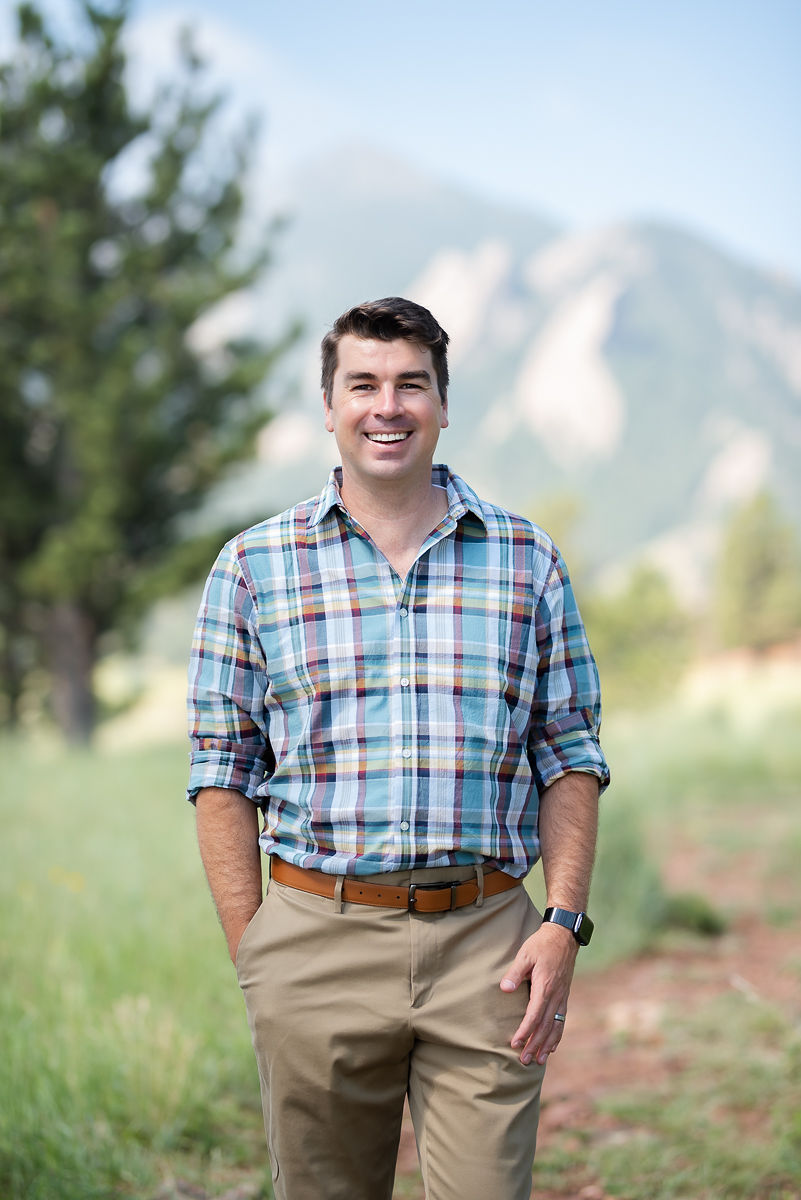

Dear Friends and Neighbors.
Voting should not require a scavenger hunt. Boulder voters will soon choose a mayor, five City Council members, and the outcome of four city ballot measures, along with federal, state, county, judicial, and other contests.
This guide covers the City of Boulder portion of the ballot along with selected Boulder County, regional and statewide measures. I have linked the official sources throughout so you can read the full language and reach your own conclusions. I will update this guide if the county, city, or state publishes corrections or additional fiscal details.
Grab your favorite beverage and snack, as this is a long one.
According to the Boulder County Elections calendar:
Oct. 2: Ballots begin mailing; 24-hour drop boxes open.
Oct. 19: Vote centers open.
Oct. 26: Last day to request that a replacement ballot be mailed, and the county’s recommended last day to return a ballot by mail.
Nov. 3: Election Day. Ballots must be received by 7 p.m.
Nov. 12: Deadline to cure a signature discrepancy or provide missing identification.
You can confirm or update your registration through Go Vote Colorado, review the official county sample ballot, and find vote centers and ballot drop boxes through Boulder County Elections.
Mayor: Six Candidates, Ranked-Choice Voting
Ranked-choice voting lets you rank candidates in order of preference rather than choosing only one. If no candidate receives a majority of first-choice votes, the candidate with the fewest votes is eliminated, and those ballots transfer to each voter’s next-ranked active candidate. The process continues until one candidate has a majority.
I helped lead the effort that brought direct election of the mayor and ranked-choice voting to Boulder, alongside a committed group of people who contributed enormously to its success. Because I believe deeply in that reform, I want voters to use it as intended.
Rank every candidate you could genuinely accept as mayor, in your honest order of preference. Ranking a second, third or fourth choice does not weaken your first choice. Those later rankings are considered only if the candidates you ranked above them have been eliminated.
Voting for only one candidate does not spoil your ballot, but it can cause your ballot to become exhausted. If your only ranked candidate is eliminated, your ballot can no longer help decide between the candidates who remain. Bullet voting does not give your first choice extra strength; it only gives you less influence if that candidate does not advance.
That does not mean you should rank someone you would never want to serve as mayor. It means you should think carefully about every candidate you could accept and rank those candidates in order. Ranked-choice voting gives you more than one opportunity to shape the outcome. Use those choices thoughtfully.
The city’s official 2026 candidate page provides candidate information and filing links.

My Choice for Mayor: Aaron Brockett
I am supporting Aaron Brockett for reelection as mayor.
Aaron brings deep institutional knowledge and an unquestionable understanding of how the city works, what it has done, how decisions get made, and how to move a complex organization forward. He has accumulated that knowledge through more than a decade of public service. That experience is invaluable as Boulder navigates a difficult and consequential period.
The mayor is not simply another vote on Council. The mayor must run productive meetings, understand the structure and responsibilities of city government, represent Boulder throughout the community, and help nine independently elected council members work together. For this role, experience is not incidental; it is foundational. Aaron has it in abundance.
As a council member serving alongside Mayor Brockett, I have seen the value of that experience firsthand. I do not have to worry about whether meetings will be managed competently, whether the process will stay on track or whether Boulder will be represented thoughtfully in the community. I can focus on doing my own job because Aaron knows how to do his.
Every elected official continues learning, but the mayor’s office is not a role Boulder can afford to have someone learn from scratch. The issues facing our city are too large, too urgent, and too consequential. The next Council must be able to focus immediately on making hard decisions, not divert its attention toward teaching a new mayor the fundamentals of how the city operates or how to lead the Council.
Continuity by itself is not enough. But tested leadership, institutional knowledge, and the ability to contribute from day one matter enormously. Aaron Brockett offers all three, and he is my clear first choice for mayor.
For the remaining rankings, I encourage you to ask the same questions I use when evaluating public servants: Do they have the experience and judgment the job requires? Do they understand Boulder’s council-manager form of government? Will they listen, collaborate, and make hard decisions? Do they have the temperament to lead a nine-member Council and represent the entire community?
I am not going to prescribe your second, third or fourth choices. Those are judgments each voter should make thoughtfully. But please make them. Rank every candidate you could genuinely accept, in your true order of preference, so your voice can continue to count even if your first choice is eliminated.
City Council: Thirteen Candidates, Five Seats
I am endorsing the three incumbents: Ryan Schuchard, Tina Marquis, and Tara Winer, and two new candidates I look forward to joining us on Council: Rachel Rose Isaacson and Ryan Jamieson.
Part of my reason for supporting all three incumbents is the need for continuity. This election will already bring at least two new members to Council because of the vacancies created by Mark Wallach's resignation and Taishya Adams's decision to run for mayor. On a body of nine people, two new members represent significant change.
New voices and fresh perspectives are valuable, but so is institutional knowledge. When too much of a council turns over at once, the result is rarely faster action. New members need time to learn the city's systems, build working relationships, and understand the context behind decisions already underway. A healthy balance of continuity and change gives the next Council the best chance to move forward without losing momentum.

Tara Winer
Tara may be the best listener on Council. She will talk to anyone and everyone, and she approaches those conversations with a genuine desire to solve problems, no matter how large or small. Tara will often call me after hearing about an issue and ask simply, “Matt, we need to solve this? How can we fix it?” Her desire to help people runs deep.
Tara does not reserve that concern for the people or organizations that supported her. She does not begin by choosing sides; she begins by asking what someone needs and whether the city can help. That willingness to work on behalf of anyone and everyone is genuinely rare in politics.
She also brings an important perspective to Council's decisions about growth and change. Tara consistently asks how we care for older adults, support seniors who want to age in place, and protect residents who may be house-rich but cash-poor. Older adults are one of Boulder's largest and fastest-growing demographic groups, and their needs must be part of how we plan our city's future. Tara understands that Boulder must grow responsibly without pushing out people who have called this community home for 40 or 50 years. That perspective makes Council stronger, and it is why I support her reelection.

Tina Marquis
If one characteristic defines Tina, it is that she is extraordinarily data-driven. She wants to know our goals, how we will measure success, and what evidence will tell us whether a policy is actually working. Boulder regularly confronts issues that are politically charged and emotionally difficult. Tina has the ability to cut through that noise, focus on the objective, and evaluate the evidence without bending it toward a preferred conclusion. That is an essential skill on Council.
Tina's desire for more information can sometimes slow a decision or risk analysis paralysis. But I have seen her work to find the right balance between gathering enough evidence and recognizing when it is time to act. I value having a colleague who pushes us to define our objectives clearly, question our assumptions, and measure whether the choices we make are producing the results we promised.
Tina also brings a clear understanding of how city policy affects families and children, especially as Boulder Valley confronts declining enrollment and school consolidation, as she previously served as president of the BVSD School Board. She understands the direct connection between housing, particularly housing that works for families, school enrollment, and the long-term health of our neighborhoods. As Boulder considers how and where to grow, Council needs someone who will keep families, schools, and neighborhood stability connected in that conversation. Tina brings that perspective, and it is why I support her reelection.

Ryan Schuchard
I am supporting Ryan because I have watched him grow into a true public servant. He began his Council tenure focused primarily on transportation as a climate solution. That remains an important strength, but over time he has broadened his leadership and taken responsibility for a much wider range of challenges facing Boulder.
I am particularly proud of the way Ryan has listened and is now working to act decisively on wildfire resilience. As a parent of young children, he understands that climate leadership is not only about reducing greenhouse-gas emissions. It is also about protecting our community and future generations from the consequences already arriving. Ryan brings clear ideas for improving our transportation system and reducing its climate impact, while also showing real leadership on wildfire and flood protection.
He applies that same long-term thinking to middle-income and family housing. Ryan understands that well-planned infill can allow more people to live closer to where they work, learn and play, reducing transportation emissions while creating more attainable housing and stronger neighborhoods. His approach connects climate mitigation, climate adaptation, and the everyday needs of Boulder families.
Sometimes the most important measure of a council member is not where they begin, but how they listen, evolve, and grow into the public servant their community deserves. Ryan has demonstrated that growth, and I am proud to endorse him for reelection.

Rachel Rose Isaacson
I am supporting Rachel because of what she did after her unsuccessful run for City Council last year: she turned disappointment into action and service. She stayed deeply engaged, joined the board of the Sierra Club, and continued doing the work required to become a strong public servant. That response says a great deal about her character and work ethic. Rachel did not need to hold office to start serving Boulder.
Rachel would also bring voices and lived experience that are not currently represented on Council. She would be Council's only Gen Z member and its only restaurant worker. Both perspectives matter. A multigenerational city needs leaders from different generations helping make decisions about its future, and Council needs direct insight from people working in an industry facing extraordinary pressure.
Boulder's restaurants and service businesses are struggling, as they are across the country. The city cannot solve every challenge facing those industries, but there are steps we can and must take to help strengthen and stabilize them. Supporting these businesses also means protecting the opportunities and livelihoods of the people who work in them. Rachel understands from experience that business stability and worker stability are connected.
I look forward to working with Rachel and learning from the perspective she would bring to the table. Her record of service, her work ethic, and her lived experience would help Council make decisions that work not only for businesses, but for workers and the next generation of Boulder residents as well.

Ryan Jamieson
I am supporting Ryan because he brings a fresh perspective and a bias toward action. In the time I have spent with him, I have noticed how quickly he gets down to business. He cuts through the noise, identifies the goal, and asks for the most direct path to reach it. I respect that. Every level of government needs people who understand that public service is ultimately about taking action and producing results.
Ryan's expertise in cybersecurity and his military service have helped shape that approach. Both require the ability to evaluate risk, absorb complex information, and make decisions under pressure. Decisiveness does not mean acting without facts. It means recognizing when you have enough information to make a responsible choice, making it, and moving forward.
If I have one criticism of the Councils on which I have served, it is that we have sometimes taken too long to decide. Delay has real consequences. Time hurts affordability and our local economy. It raises the cost and uncertainty facing people trying to establish housing or a business in Boulder. It can also weaken our ability to address public-safety needs and protect the community with the urgency those challenges require.
We are elected to identify problems, gather the information we need, act, and then turn to the next challenge. Ryan understands that responsibility and brings a strong clarity of mission to it. I believe his urgency, judgment, and willingness to make decisions would make him a tremendous addition to Boulder City Council.
Other Federal and State Races I’m SupportingI am also supporting the following candidates for federal and state office. I am listing these recommendations plainly rather than offering extended profiles for each race. Federal Offices
State Offices
|
The Four City Ballot Measures2J — Residential Vacancy Excise TaxWhat it would do: Impose an annual tax on homes that are unoccupied for more than 183 days per year. The tax would begin at $4,000 per home, increase with the Denver-area Consumer Price Index, never fall below $4,000, and never exceed $7,000. The city estimates roughly $6 million in revenue in 2028 (the first full year of collection) The ballot language says revenue could support general city services including police and fire protection, parks and recreation, transportation, maintenance and other services important to quality of life. Because that is broad General Fund language, 2J does not dedicate the revenue to one specific program. Read the official ballot language in Boulder County’s sample ballot and the city’s 2026 ballot-measures page. My recommendation: Vote yes on 2J. Boulder voters should support this measure because homes are meant for people to live in, not sit vacant. Our community faces extraordinary housing pressure. When institutional investors or people who can afford a second or third home choose to leave that property empty for most of the year, they should still make a meaningful contribution to the community whose services, infrastructure and quality of life help sustain its value. Whether a vacancy tax will change behavior remains to be seen. Some owners may decide to occupy, rent or sell their homes; others may simply pay the tax. We should not promise a housing outcome the city cannot guarantee. But a starting tax of $4,000 per year is a reasonable contribution for the privilege of leaving a Boulder home largely empty, particularly when so many people who work in and contribute to this community struggle to find housing here. If voters approve 2J, City Council should carefully define reasonable exemptions and create a clear, fair process for verifying and validating a home's occupancy. The goal is not to punish people who have legitimate reasons why a home may be vacant for more than six months. Implementation should be straightforward, respectful of privacy, and include a workable appeal process. The city should also report transparently on both sides of the policy: whether more homes return to active use and how the revenue supports services the community depends on. 2K — $400 Million Recreation and Safety BondWhat it would do: Authorize up to $400 million in general obligation debt. With a maximum repayment cost of $650 million. The ballot lists these project categories:
What the dollar figures mean: $400 million is the maximum principal the city could borrow. $650 million is the maximum repayment cost stated in the ballot, including financing costs. $32.5 million is the maximum annual city tax increase authorized for repayment, not necessarily the amount that would be levied every year. An individual property’s cost would depend on assessed value, the amount and timing of bonds issued, interest rates, and the repayment schedule. The core tradeoff: Boulder has aging facilities and a substantial backlog of capital needs. Borrowing can build or replace facilities sooner and spread costs across the residents who will use them over time. It also creates a long-term property-tax obligation, and cost estimates, construction sequencing, and project oversight will determine how much the community ultimately receives for the authorization. Read the full official 2K ballot language and the city’s ballot-measures overview. My recommendation: Vote yes on 2K. Measure 2K fundamentally addresses Boulder's infrastructure challenge. For decades, our community and successive Councils did not adequately fund the maintenance and replacement of aging public facilities. At some point, that neglect was going to catch up with us. That point is now. This Council does not want to kick the can any farther down the road. If 2K fails, the underlying needs do not disappear. We simply force the next Council, or the Council after that, to pay for them, and experience has taught us that the longer we wait, the more expensive these projects become. Buildings do not fail more slowly because voters reject a funding measure. Four hundred million dollars is a substantial authorization, and voters should treat it seriously. But Boulder also has substantial, documented needs. The South Boulder Recreation Center, our fire stations and the city's public-safety facilities are not optional luxuries. They support recreation, emergency response, wildfire readiness, policing and 911 services. If we continue postponing replacement and major maintenance, future Councils will face increasingly difficult choices about what other services to cut from the regular budget to keep failing buildings operating. This is not only an investment in today's facilities. It is an investment in the foundation future generations of Boulder residents and future Councils will inherit. We should leave them safe, functional infrastructure, not a larger backlog created by our unwillingness to act. It is also important to understand that the city would not have to borrow the entire $400 million at once, or necessarily use the full authorization. Bonds can be issued in phases. Conditions may change, and new real estate or partnership opportunities could alter whether the best approach is replacement, relocation, or renovation. The authorization gives the city flexibility, but that flexibility must be paired with discipline: updated cost estimates, clear project sequencing, public reporting, and Council approval before each round of debt is issued. Voting yes on 2K gives Boulder the ability to control its infrastructure future rather than allowing continued deterioration to control it for us. 2L — Collective-Bargaining Rights for FirefightersWhat it would do: Add a new Section 73 to the City Charter guaranteeing full-time fire department employees the right to bargain collectively over safety, wages, benefits, and other terms and conditions of employment, while reserving defined management rights. If the parties reach an impasse, the measure provides for non-binding fact-finding followed, if necessary, by a vote of Boulder electors. Read Question 2L in the official sample ballot and the city’s ballot-measures page. My recommendation: Vote yes on 2L. I fully support Measure 2L. This proposal is the product of a thoughtful, good-faith negotiation between Boulder’s firefighters and city leadership. Both sides did the difficult work of developing a framework that gives firefighters a formal voice in safety, wages, benefits, and working conditions while preserving defined management responsibilities. Voting yes validates that work and the strong partnership our city has built with the firefighters who protect this community. It does not approve a particular contract, set compensation or impose a tax. It establishes a durable process for future negotiations, one created collaboratively by the people who will have to make it work. When labor and management come together, negotiate seriously, and present voters with a mutually developed framework, we should recognize and support that partnership. I encourage Boulder voters to vote yes on 2L. 2M — Updating the City Charter’s Debt-Limit FormulaWhat it would do: Amend Section 97 of the Boulder Home Rule Charter so the city’s debt limit is no more than 3% of the actual value of taxable property in the city, replacing the current assessed-value basis. Read Question 2M in the official sample ballot and the city’s ballot-measures page. My recommendation: Vote yes on 2M. Measure 2M is a smart financial update to Boulder's debt-limit formula. Our City Charter currently calculates that limit using assessed property value. This measure would instead use actual property value, aligning the Charter with contemporary property valuation. This change is necessary for Boulder to use the full bond authority voters are considering in 2K, but 2M does not itself issue debt, approve a particular bond or raise taxes. It updates the ceiling; future borrowing must still follow all applicable legal requirements and receive voter approval whenever required. I support 2M both as a practical companion to the infrastructure investments in 2K and as a sensible modernization of the City's financial framework. Boulder should have a debt-limit formula that reflects contemporary property values and gives future voters the ability to consider major public investments on their merits. |
One Ballot, More Than City QuestionsYour ballot will also include federal and state offices, judicial-retention questions, statewide measures, and county questions. In particular, Boulder County voters will decide an early-childhood-care funding measure and questions about whether to expand the Board of County Commissioners from three members to five and, if approved, how those commissioners would be elected. Boulder County Issue 1A — Early Childhood Care and EducationWhat it would do: Increase Boulder County's property-tax mill levy by 2.579 mills, projected to raise $30 million in 2027 and additional amounts in later years. The official ballot language estimates a cost of approximately $115 per year on a $725,000 home at current assessment rates. Revenue would lower child-care and preschool costs for families, increase compensation to attract and retain educators and staff, and expand capacity to serve more children and reduce waitlists. Read the county's official Issue 1A language and supporting resolution. My recommendation: Vote yes on Boulder County Issue 1A. I fully support early-childhood care and education and the funding this measure would provide. Access to reliable, high-quality care gives children a stronger start, helps parents remain in the workforce and supports the educators whose work makes the entire system possible. What is disappointing is that local communities are being asked to do work that state and federal governments should be doing. Child care and early education are basic economic and social infrastructure. When cities and counties must create local funding simply to make those services accessible and sustainable, it shows that higher levels of government are not meeting the needs of the people they represent. But local families cannot wait for Washington or the state legislature to solve the problem. Issue 1A would lower costs, improve pay and retention for early-childhood educators, and expand the number of available spaces. The property-tax increase is real and should be acknowledged, but so are the costs families and our economy already bear when care is unaffordable or unavailable. I encourage Boulder County voters to vote yes. Boulder County Questions 200 and 201 — Expanding the Board of County CommissionersWhat they would do: Question 200 asks whether to expand the Boulder County Board of Commissioners from three members to five. Question 201 applies only if Question 200 passes and asks voters to choose between two election systems: (1) five commissioners elected only by voters in their respective districts, or (2) three commissioners elected by district and two commissioners elected countywide. Read the county's official language for Questions 200 and 201. My recommendation: Vote yes on Question 200 and choose Option 1 (five district-elected commissioners) on Question 201. Expanding the Board of County Commissioners from three members to five is simply good governance. On a three-member board, any conversation between two commissioners involves a quorum and therefore triggers Colorado's open-meetings requirements when they discuss public business. That makes ordinary brainstorming, problem-solving, and relationship-building much more difficult. Serving on a nine-member City Council has shown me how valuable it is to call a colleague, understand how they are thinking, and explore where there may be room to collaborate before a public meeting. A one-on-one conversation cannot make a decision because it is not a quorum. It can, however, help elected officials understand one another and arrive at a public meeting better prepared to work through the community's hardest problems. A five-member county board would create that same opportunity while retaining the transparency and public decision-making the law requires. Five commissioners would also provide broader representation across a large and diverse county. On Question 201, I see legitimate advantages to both options. Five district-elected commissioners would strengthen geographic representation and give every part of the county its own directly elected voice. A hybrid board of three district commissioners and two countywide commissioners would preserve broader countywide accountability. I do not believe either model is inherently bad, but if I have to choose, I prefer five district-elected seats. Ballot Issue 7A — Front Range Passenger RailMy recommendation: Vote yes on 7A. The Front Range has been promised passenger rail for far too long. If we consider ourselves a modern, connected region, rail service linking our cities is not a luxury; it is essential infrastructure. I have long wanted to be able to take a train from Boulder to Denver. Measure 7A brings us closer to a system that allows people to move easily up and down the Front Range and travel to and from our city without depending on a car for every trip. A true regional network can connect people to jobs, universities, events, and one another while adding badly needed transportation capacity. I understand why Boulder County residents are skeptical after paying into the 2004 FasTracks program without receiving the promised Northwest Rail service. That history makes accountability more important, not regional rail less necessary. The district must publish clear milestones, coordinate strong first- and last-mile connections, and demonstrate through independent audits that the money is producing the service voters approved. For roughly 33 cents on a $100 taxable purchase, 7A is a worthwhile investment in the transportation system the Front Range should have built years ago. I encourage voters in the district to vote yes. |
Proposition NN — Funding K–12 Education and Children’s ProgramsMy recommendation: Vote yes on Proposition NN. Colorado has chronically underinvested in K–12 education. Studies commissioned by the legislature have estimated that the state falls billions of dollars short of what it costs to educate our students well. Proposition NN is therefore a straightforward choice for me: we should invest more in our schools and in the future generations who depend on them. I hope that, in my lifetime, Colorado moves from lagging other states in education investment to being among the best. NN will not accomplish that by itself, and many more steps will be needed. But it moves us in the right direction by supporting teachers, reducing class sizes and expanding career and technical education. We owe every child the tools and opportunities to succeed after high school, whether that means college, an apprenticeship, military service or entering the workforce. That requires sustained investment, not another generation of asking educators and students to do more with less. I understand that voting yes means giving up some future TABOR refunds. I believe investing those dollars in Colorado's children and public schools is worth it. Proposition 137 — Sporting-Goods Revenue for ConservationMy recommendation: Vote yes on Proposition 137. I am normally skeptical of dedicated taxes and revenue set aside for a specific purpose. Budgets need flexibility, and elected officials should generally be able to respond when needs change. But Proposition 137 makes an appropriate connection between the revenue source and the public investment it supports. Outdoor recreation is one of the pillars of Colorado's economy and a major reason people choose to live here and travel here. Yet increased use also brings wear and tear to our trails, parks, forests, watersheds, and wildlife habitat. Those pressures require more conservation, restoration, and wildfire-mitigation resources as more people come to enjoy our state. Proposition 137 applies a reasonable user-pays principle without raising the tax rate: a portion of the existing sales-tax revenue generated by sporting goods would help sustain the places where those goods are used. People who benefit from Colorado's outdoors, including residents and visitors, would help protect them for the future. I believe that is a sensible exception to my usual concern about dedicated revenue, and I encourage a yes vote. Amendment 87 — Graduated State Income TaxMy recommendation: Vote yes on Amendment 87. I support Amendment 87 because it creates greater equity in Colorado's tax structure. A flat tax may look equal on paper, but the same percentage has a very different effect on a working family than it does on someone earning more than half a million dollars a year. This measure provides tax relief to the overwhelming majority of Coloradans while asking those with the greatest means to contribute a little more. That is the kind of tax structure that supports the middle class, recognizes people's ability to pay, and shares responsibility more fairly. The additional revenue would strengthen K–12 education, health care, and early childhood care and education, services that support working families and help create opportunity across generations. The measure is not perfect; lawmakers should address the fact that its brackets are not indexed to inflation. But its central principle is sound: most Coloradans should receive relief, those most able to contribute should pay a larger share, and the resulting revenue should support the public foundations on which a strong middle class depends. Statewide Measures: My Recommended “No” Votes On City Council, I have learned that the title of a proposal is never enough. We have to ask how it will actually work, who will be affected, what unintended consequences it may create, and how easily we can correct it if experience shows we got something wrong. That standard is especially important when a proposal would amend the state constitution. Detailed policy does not belong in the constitution simply because its sponsors found an appealing label for it. Let’s be clear, many of these proposed amendments are heinous and downright offensive. I recommend voting no on Amendments 81 through 86 and Propositions 132 through 136:
These are not votes against public safety, secure elections, clear ballots, wildlife stewardship, or protecting children. They are votes against using emotionally powerful labels to enact rigid policies that remove judgment, reduce local flexibility, and directly harm people we must protect. My ApproachBallot language is necessarily technical, but the choices are not abstract. They concern who leads the city, how Boulder pays for major public facilities, whether homes left vacant should contribute additional revenue, how firefighters negotiate employment conditions, and how much debt the city may legally carry. My goal in this guide is to tell you plainly what I support, explain why, and give you the source material to check my work. You do not have to agree with every conclusion. You should be able to see how I reached it. As always, thank you for being engaged, asking hard questions, and caring deeply about Boulder’s future. Please make a plan to vote, return your ballot early if you can, and remind friends and neighbors that ballots must be received by 7 p.m. on Nov. 3. If you found this helpful, I'd appreciate you forwarding it to friends and neighbors. The more people understand the full picture, the better decisions we'll all make together. Matt Benjamin Boulder City Council |


Comments